The two-minute safety test every garage door should pass, and what to do when it fails
Every opener sold since 1993 is built to reverse when something is under the door, two different ways. Both can quietly stop working: a bumped sensor, a force setting that crept up, a dry roller that makes the door bind. The test takes two minutes and is worth running twice a year.
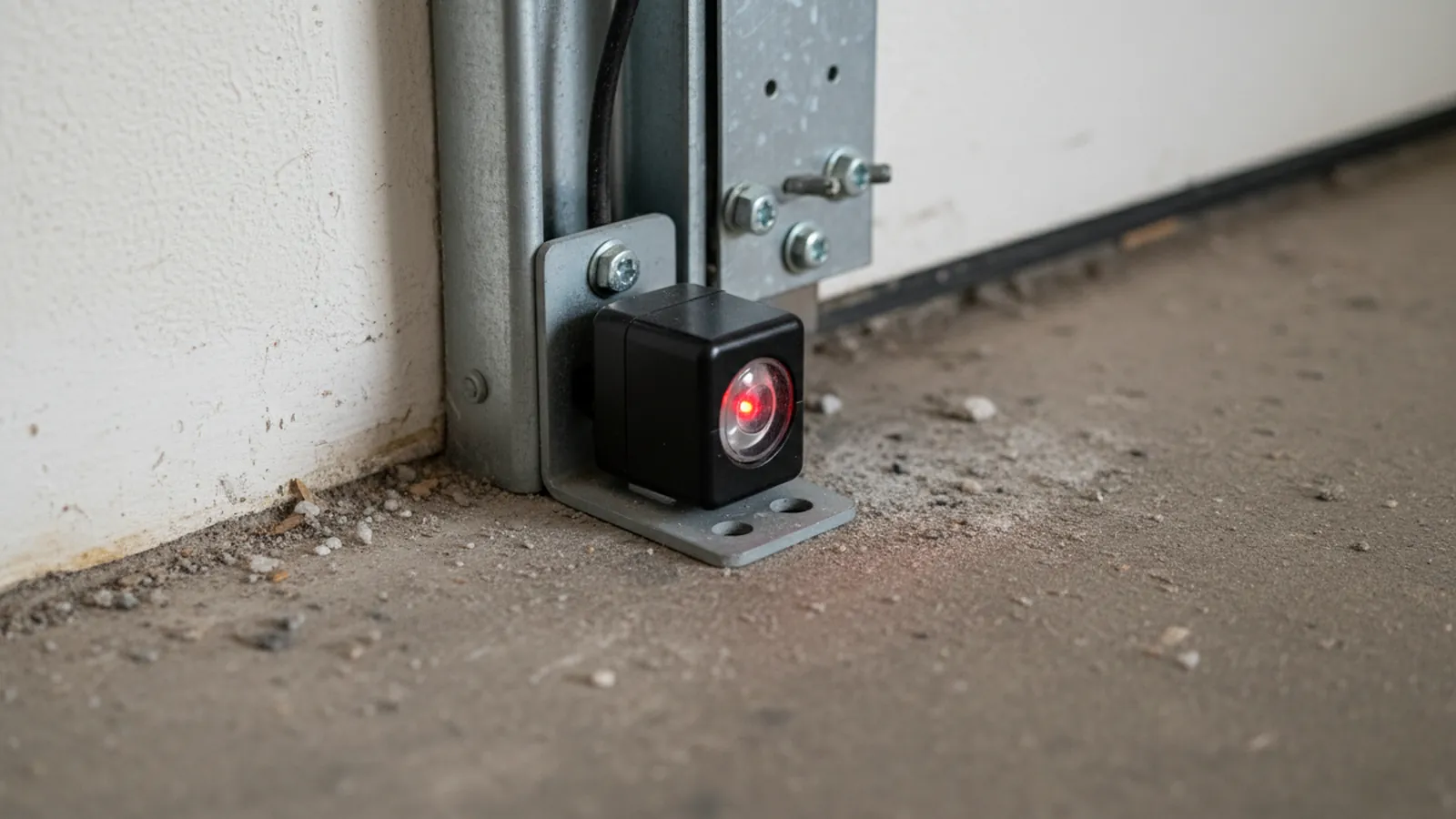
Test 1: the photo-eyes
Start with the door open. Press the button to close it, and as it comes down, wave a broom handle or your foot through the beam between the two sensors near the floor. The door should stop and go back up at once. If it keeps closing, the sensors are not doing their job: check that both indicator lights are steady, wipe the lenses, re-aim, and look for a damaged wire. If the door will not close at all from the remote and the opener light blinks, the eyes are misaligned or blocked, which is the opposite problem and the same fix. Do not bypass the sensors; most openers will not run without them, and the ones that can be bypassed should not be.
Test 2: the contact reverse
Lay a two-by-four flat on the floor in the middle of the opening, the 1½-inch side up. Close the door. When the bottom section touches the wood, the door must reverse within about two seconds. If it stops on the block and sits there, or pushes down and stalls, the close force is set too high and the door would do the same to a foot, a paw or a toddler. Adjust the force down, using the dials or buttons on the powerhead and the manual, until the door reverses on the block, then run the test again. If you cannot get it to reverse at a force that still closes the door, the door is binding somewhere, and that is the technician's job.
What a fail usually means in the West Valley
Sun on the receiver. A west-facing garage fails the photo-eye test in the late afternoon and passes it in the morning. Swap the sender and receiver or fit a hood. Dust. A film on the lens after a monsoon makes the eyes unreliable. Wipe them. Force crept up. Someone turned the force up to get past a dry roller or a tired spring, and now the door will not reverse on the block. Fix the roller or the spring and turn the force back down. Chewed wire. Packrats and geckos find the low-voltage wire. Re-run and staple it clear.
Why it matters more than it seems
A two-car door weighs 150 to 250 pounds, and the opener's force setting is the only thing that decides whether it stops on an obstruction or crushes it. Children and pets are what the reversing standard was written for, and in this climate pets spend a lot of time in a shaded garage. Run both tests when you lubricate the door in April and October, after any opener adjustment, and after any work on the springs or rollers, because a change in the door's balance changes the force the opener needs.
Questions on this topic
The door reverses on the block but not when I wave my foot through the beam.
The photo-eyes are the problem: dirty, misaligned, sun-blinded or wired wrong. The contact reverse is working; the beam is not. Clean and re-aim, and call if the receiver light will not hold steady.
The door passes the beam test but pushes down on the block.
The close force is too high. Turn it down on the powerhead until the door reverses on the block, and find out why someone turned it up; usually a binding roller or tired springs.
Can I use something softer than a two-by-four?
The standard test is a 1½-inch obstruction, which is what the board's narrow side gives you. A roll of paper towels is the common substitute and works for a rough check.
My older opener has no photo-eyes. Does the block test still apply?
Yes, and it is the only protection the door has. An opener without photo-eyes predates 1993 and should be replaced regardless; it reverses on contact only, if at all.
How often should I run the tests?
Twice a year with the maintenance checklist, and after any work on the door or opener.
What if the door will not reverse at any force setting?
Something is binding: a dry or worn roller, a bent track, springs that have lost tension. Stop adjusting the force and have the door looked at; the opener is fighting the door, not the block.
See also: Sensor repair · Maintenance checklist · Opener not working? · Opener installation